Posted by Debjit
in Accessories
in Accessories
How AI Is Changing Client Expectations in Web Design – What Every Designer Must Know in 2026


How AI is changing client expectations in web design is one of the most searched and most misunderstood topics in the design industry right now. Ask any freelance web designer or agency owner what’s shifted in their client conversations over the past 18 months and they’ll tell you the same thing – clients have changed. Not a little. Fundamentally.
They come in more informed. They push back differently. They compare your quote to a Framer template they built last weekend. They ask whether you use AI. They want results in days, not weeks. And they want to know – with actual data – whether their new website is working.
The way AI is changing client expectations in web design in 2026 isn’t a single shift. It’s a complete reset of the relationship between businesses and the people they hire to build their digital presence. Understanding this reset – not just acknowledging it, but really understanding it – is the difference between a web design business that grows in 2026 and one that quietly loses ground to designers who figured it out first.
This is that understanding, written plainly.
The AI adoption rate across global businesses has hit 84% in 2026 – meaning the vast majority of your clients have already used AI tools in some professional capacity before they reach out to you. They’ve generated copy with ChatGPT. They’ve made images in Canva AI. Some have built a prototype in an AI website builder in an afternoon and felt the mix of excitement and inadequacy that comes with it.
This is where the expectation shift starts. Not in boardrooms. Not in trend reports. In the firsthand experience of business owners who touched AI tools and formed opinions – sometimes accurate, often not – about what AI can and cannot do.
According to Semrush data from 2026, commercial keywords triggering AI Overviews in search results increased by 128% year on year. The way clients search for information has changed. The way they evaluate vendors has changed. The way they understand timelines, deliverables, and value has changed. All of it traces back to how AI is changing client expectations in web design – and the speed of that change is accelerating, not slowing.
What nobody predicted clearly enough was this: AI wouldn’t just create new tools. It would create a new type of client.
The 2026 client who hires a web designer is not the same person who was hiring in 2022. Four years ago, a client came to a designer because they genuinely didn’t know how websites worked. Today, many of them have a working theory.
They’ve seen AI generate a five-page website in twelve minutes. They’ve watched YouTube tutorials about Webflow. They follow design accounts on Instagram and LinkedIn. They know what “above the fold” means. They’ve heard of Core Web Vitals. They’ve been pitched enough “AI website” services from cheap providers that they’ve developed a healthy skepticism – but also a distorted price anchor.
This creates a client who is simultaneously more educated and more confused than any client profile designers have had to manage before. More educated because they understand the landscape. More confused because they don’t fully understand what separates a fast, cheap, AI-generated website from a strategically built, conversion-focused one.
Research published by Flowvibe Studio in 2026 captures it directly: clients in 2026 no longer think of a website as a brochure. They want measurable impact. They want faster delivery. They want ongoing value. They want a real partnership – and AI is the reason their expectations of what “fast” and “valuable” means have fundamentally changed.
This is how AI is changing client expectations in web design at the most foundational level. It’s not about features. It’s about the client’s entire mental model of what a website project should look like.
In 2022, spending two to three weeks on discovery and wireframes before showing anything visual was standard practice and broadly accepted. In 2026, that timeline reads as slow to most clients – because they have a reference point. An AI builder gave them something to look at in twenty minutes. A prototype from a competing design agency arrived in 48 hours.
Survey data shows 70% of clients now close deals after seeing a prototype demonstration – not after reading a written proposal. The decision trigger has moved from words to visuals, and it’s moved earlier in the process than ever before.
For designers, this is both a pressure and an opportunity. AI-powered tools now make it genuinely possible to generate a comprehensive wireframe and visual direction within a day or two of a brief. Designers who have adapted their workflow to deliver early are winning more proposals. Those who haven’t are losing them to ones who do.
One of the clearest themes in 2026 client feedback across agency and freelancer surveys is this: clients don’t want to feel dependent on their designer after launch. They want to update content, publish blog posts, change pricing, and add new pages – without filing a request and waiting three days.
AI-powered website builders and platforms have normalized this expectation. Clients who have used Webflow, WordPress, or Framer know that editing a website can be as intuitive as editing a Google Doc. Designers who build in closed, opaque systems that create permanent dependency are losing clients to those who build with the client’s autonomy in mind.
This expectation is directly tied to how AI is changing client expectations in web design – because AI tools have lowered the barrier to editing and updating websites, clients now know that dependency doesn’t have to be part of the deal.
The idea that a website is “done” when it’s launched is fading fast. Clients in 2026 check their Google Analytics. They understand bounce rate. They’ve read enough LinkedIn content to know that a slow-loading website hurts their SEO rankings. They want to see, with actual data, whether their investment is working.
Websites using AI for content optimization are seeing 40% higher organic traffic growth compared to those using manual methods, according to BrightEdge data. Clients are aware of these possibilities – and increasingly, they expect performance accountability to be part of what they’re paying for.
This is perhaps the most structurally significant shift in how AI is changing client expectations in web design. The deliverable is no longer a design. The deliverable is performance.
This is the expectation that surprises most designers. Clients aren’t necessarily asking for AI-generated websites. They’re asking whether their designer is using AI in their workflow. It has become a credibility signal – the 2026 equivalent of asking whether a designer knows Photoshop.
A 2026 study found that 76% of web design professionals now see AI as their primary business threat – but the designers who are actually losing ground are not the ones competing with AI. They’re the ones who appear threatened by it. Clients read defensiveness about AI as a sign of falling behind. Confidence and fluency – even if the tools are used selectively – signal competence.
The days of AI chatbots and personalization being “premium add-ons” are largely over for clients who have researched the market. Over 80% of project briefs in 2026 now include requirements for at least three AI-powered features – AI chat support, personalized content, automated email sequences, AI-powered site search, or dynamic content that adapts based on user behavior.
AI-driven layout optimization creates an average 15% increase in conversion rates when implemented correctly. Clients have seen this data, or at least the marketing version of it, and they want to know whether their website can do the same. Designers who can speak to this intelligently – who understand what AI personalization actually looks like in a real website – are commanding higher project fees as a result.
52% of agencies in 2026 report providing accelerated delivery timeframes compared to two years ago. AI has compressed what used to take weeks into days, and clients know it. Not because designers are cutting corners – but because AI-assisted workflows genuinely move faster at the generation and prototyping stage.
The expectation for shorter timelines is real and it’s not going away. Designers who have adapted their process to use AI tools for the mechanical work – structure generation, copy drafts, image assets, code snippets – are meeting this expectation without sacrificing quality. Those who haven’t are defending timelines that increasingly sound like excuses.
“AI can do this in minutes. Why does it take you two weeks and cost this much?”
Every web designer reading this has heard a version of this sentence. In India, it sounds like “bhai, ChatGPT se nahi hoga kya?” In the UK, it’s more polite but means the same thing. In the US, it comes with a screenshot of something a client built in Framer over the weekend.
The right response is not to defend AI’s limitations. The right response is to reframe the question entirely.
Ask the client: “What do you want this website to do – look good, or generate leads?”
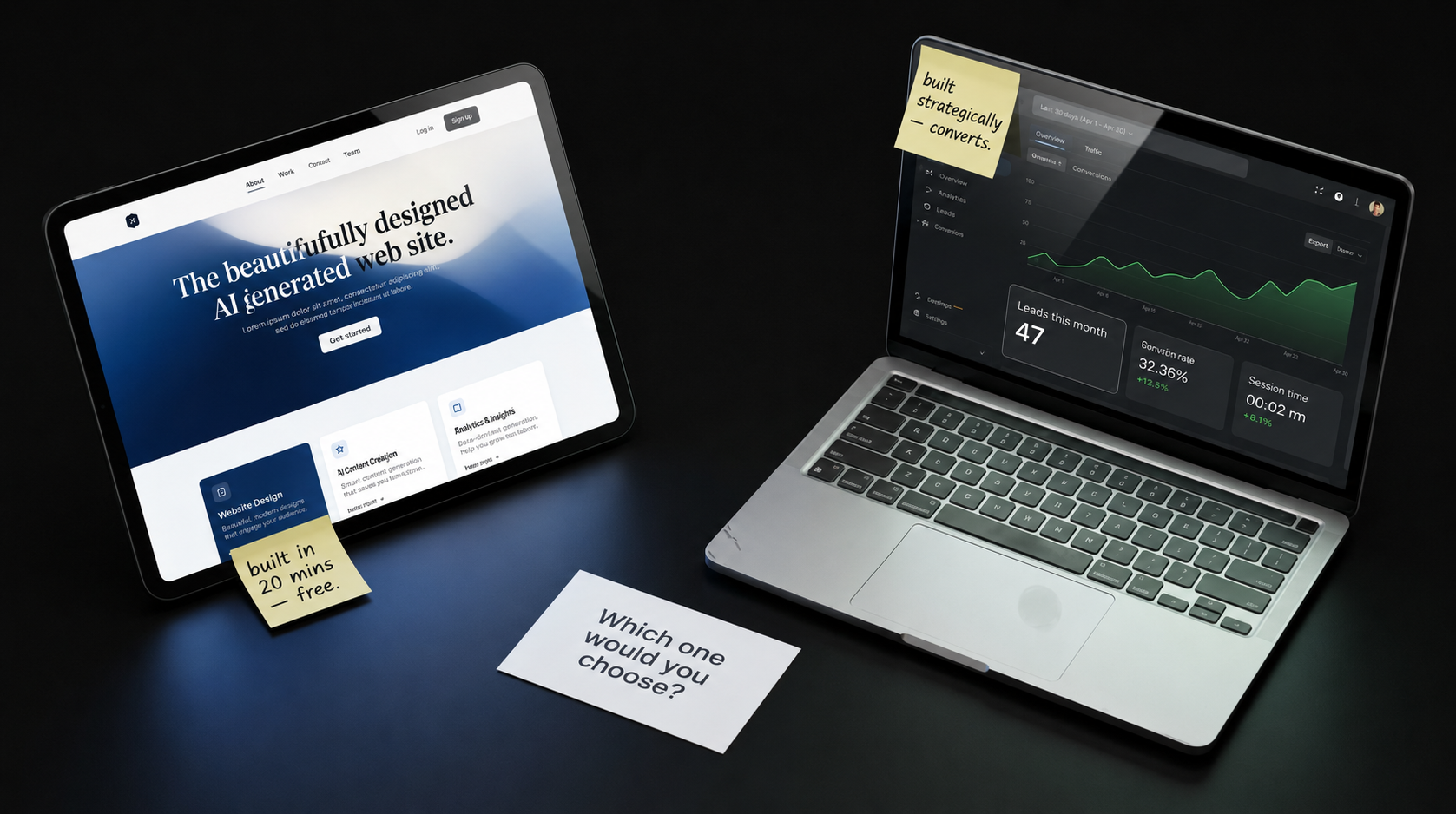
Then show them the difference. Not in theory. In data. A before-and-after conversion comparison. A real case study. An analytics screenshot that shows what a strategically built, conversion-focused website achieves compared to a generic AI-generated one.
According to research from GoHighLevel published in 2026, a majority of customers now expect personalized, timely, and relevant interactions across every digital touchpoint – and they’re more likely to stay loyal to brands that deliver this. The gap between what AI generates automatically and what a human strategist builds deliberately is precisely the gap that determines whether a website performs or sits idle looking impressive.
When the conversation shifts from “why does it cost this much” to “what is this investment going to return,” everything changes. That’s the conversation skilled designers are having in 2026. It’s the only one worth having.
Here is the insight that doesn’t appear in any trend report – and it’s the most commercially useful thing in this article.
AI has given clients more access, more speed, and more options. And it has made them more anxious about their websites, not less.
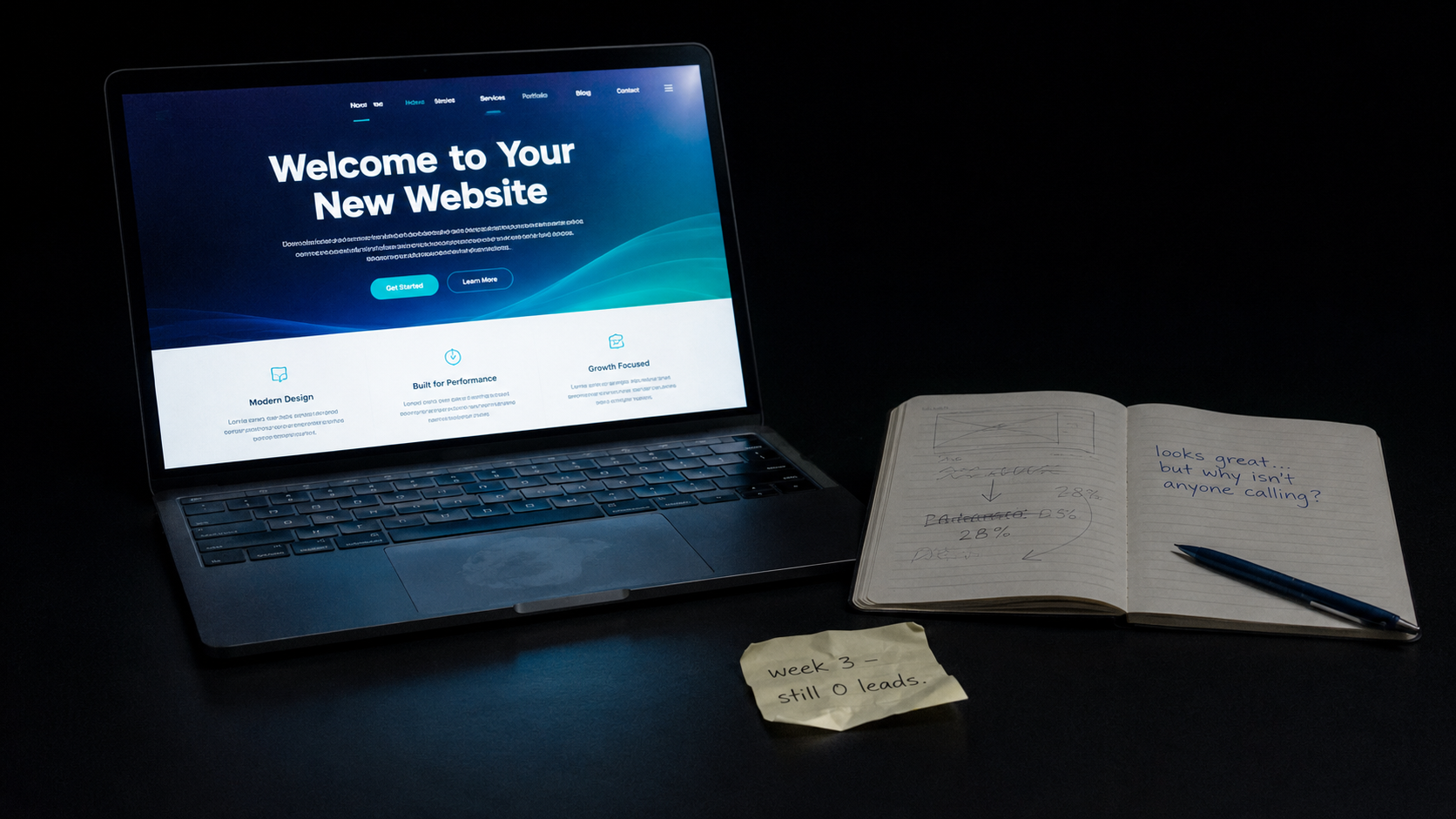
Why? Because they now know enough to second-guess everything but not enough to trust their own judgment. They can generate a layout in twenty minutes and spend two days wondering if it’s actually good. They can use an AI tool to write their homepage copy and feel quietly unsettled that it sounds indistinguishable from every other business in their industry. They can see a beautiful AI-generated mockup and have no real sense of whether it will convert a single visitor.
Forrester’s 2026 Predictions report identifies a “pragmatic reset” taking hold as businesses move past the initial excitement of AI tools and start demanding measurable value and genuine trust – not just impressive demos. Clients are experiencing this reset firsthand. They tried the fast AI route. They felt the gap between impressive and effective. Now they’re looking for the human expertise that fills that gap.
The client who has tried the DIY AI route and felt its limits is your most motivated prospect right now. They’ve already experienced the cost of generic. They’re ready to understand why strategic professional design costs what it costs. They just need someone to show them clearly and confidently.
The global shifts in how AI is changing client expectations in web design are real – but the Indian market has its own specific texture in 2026.
Indian clients – particularly small business owners, D2C founders, local service businesses, and growing startups – have been hit by two forces simultaneously. First, access to free and near-free AI tools that let anyone generate something that looks like a professional website. Second, a flood of very cheap “AI website” services – often sold for ₹5,000 to ₹15,000 – that deliver generic, template-based results that don’t convert and don’t rank.
AI tools for small businesses in India have become genuinely accessible in 2026 – with free tiers of widely used platforms now capable of automating tasks that previously required a full-time hire. This has raised client awareness of what’s possible, while simultaneously muddying their understanding of what professional quality actually requires.
The result is an Indian market that is simultaneously more educated about what websites can do, more confused about what quality costs, more burned by cheap experiences, and more ready to invest properly when someone explains the value clearly. The Indian client in 2026 who spent ₹12,000 on a website that generated zero leads is not a lost cause. They are your most motivated potential client. They’ve lived the gap between pretty and effective. They’re ready to understand why strategy matters – they just need someone to explain it in terms of their business outcomes, not design philosophy.
Understanding how AI is changing client expectations in web design in 2026 is the foundation. But the trajectory matters as much as the current state.
Industry analysts predict that by 2027, websites will evolve from static pages into what’s being called “intelligent digital partners” – adaptive systems powered by real-time data, multi-modal interaction through voice, chat, and visual inputs, and AI that learns from visitor behaviour to continuously optimize the experience.
Google’s 2026 core update already rewards websites that are fast, accessible, cleanly structured, and intelligently optimized – aligning directly with what AI-informed clients are now demanding. The technical and the commercial are converging in the same direction: websites that perform, adapt, and prove their value.
Coalition Technologies’ 2026 web design trends analysis confirms that search behaviour has shifted from fragmented keywords to conversational prompts – meaning websites now need to be structured for how people actually talk, not just how they used to type. Clients are beginning to understand this, partly because AI tools have made conversational search a natural part of their daily life.
What this means practically: client expectations in 2027 will make 2026 expectations look modest. The designers and agencies building AI-fluent, performance-focused, strategy-led practices right now will be positioned to serve those clients. The ones waiting to see how it all plays out will be playing catch-up in a market that has already moved on.
Understanding how AI is changing client expectations in web design is only useful if it translates into action. Here is what that action looks like practically:
Deliver a visual direction within 72 hours of any new brief. Not a finished design – a direction. A rough sitemap, a layout concept, a design reference that shows you’ve understood the client quickly. This single change transforms conversion rates on proposals and sets the tone for a collaborative relationship.
Make your AI workflow visible. Don’t wait for clients to ask whether you use AI. Tell them upfront which tools you use, how they help you work efficiently, and where human judgment takes over. This is a confidence signal, not a confession. Clients in 2026 want to know their designer is working with the best available tools.
Shift the conversation from price to return. When a client questions your rate relative to AI tools, don’t explain your hours. Ask what one new client is worth to their business. Then show how a professionally built, conversion-optimized website generates that return. When the maths work in your favor, the conversation about price becomes much simpler.
Include performance accountability in every project. Before a project starts, agree with the client on what success looks like 30 and 60 days after launch. Not subjective satisfaction – specific, measurable outcomes. This protects you from undefined expectations and positions your work as a business investment rather than a creative exercise.
Build for client autonomy. Use platforms and systems that give clients genuine control over their content after launch. Recommend WordPress, Webflow, or Framer based on what fits the client’s technical comfort. The days of locking clients into dependencies that feel like leverage are over – clients know the alternatives exist.
Here is the frame that clarifies everything else: AI has not devalued web design. It has separated it into two distinct markets.
Market one is the commodity market – websites that exist to provide a basic digital presence, generated quickly using AI tools, satisfying to look at but generic in their impact. This market is largely automated now and will become more so.
Market two is the strategic market – websites built around specific business goals, genuine brand thinking, conversion psychology, and measurable performance. This market is not being automated. It is growing in value precisely because the commodity market has made “having a website” table stakes. The question is no longer whether to have a website – it’s whether your website is working.
In 2026, AI-informed web design that combines human strategy with intelligent tools achieves ROI of 3.7x compared to 0.2x for traditional-only approaches. That is not a marginal difference. It reflects two entirely different categories of outcome.
The designers and agencies who understand how AI is changing client expectations in web design – and who position themselves clearly in the strategic market – are not competing with AI. They are using AI as infrastructure while building something on top of it that automation cannot replicate: genuine business thinking, human trust, and accountable creative judgment.
That is the opportunity in 2026. And it is larger than it has ever been.