Posted by Debjit
in Accessories
in Accessories
What Clients Really Want From Web Designers in 2026 And What Most Designers Are Still Getting Wrong


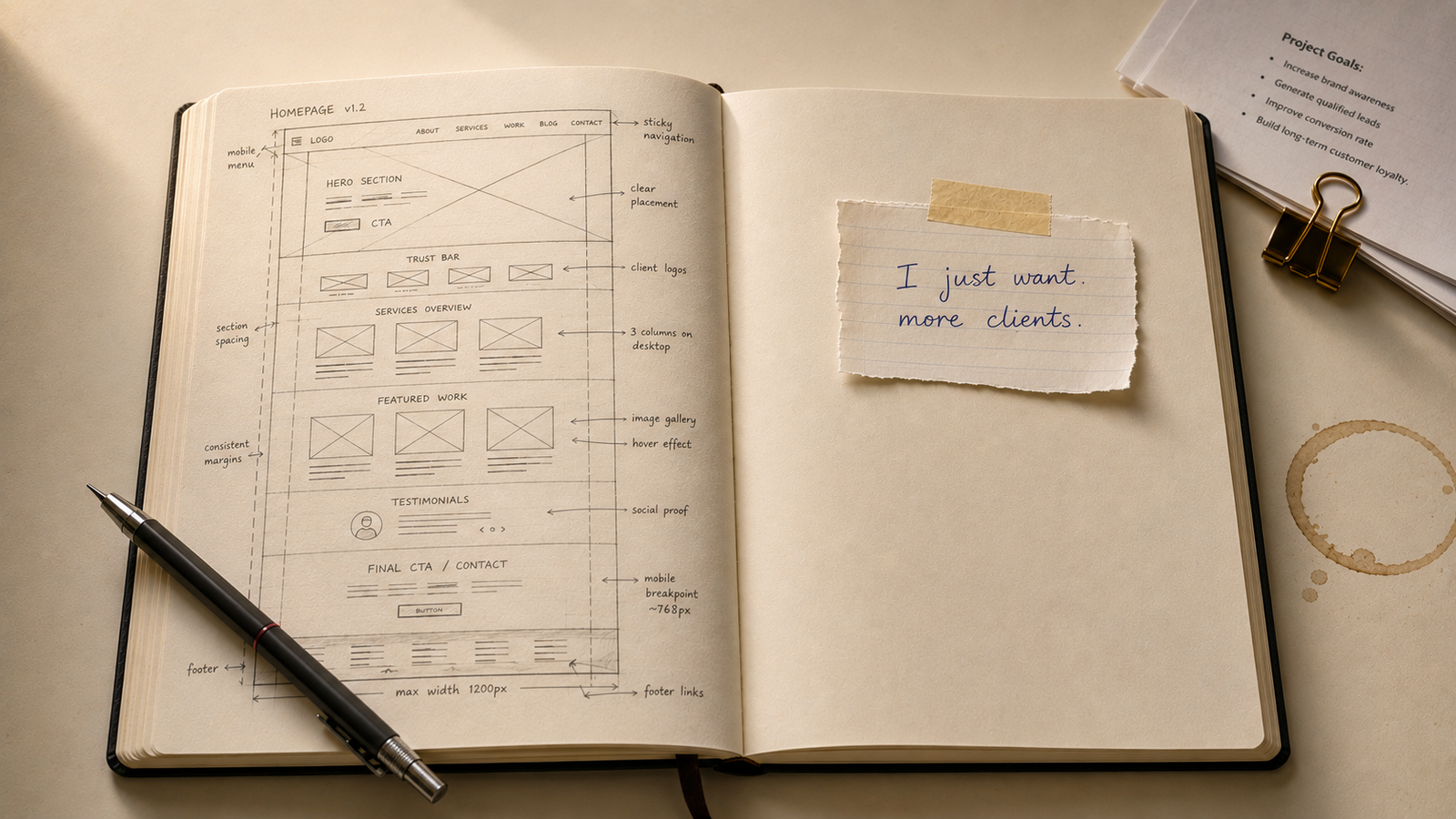
What clients really want from web designers in 2026 has almost nothing to do with what most designers think they want.
Ask most designers what their clients care about and you’ll hear: a clean design, mobile responsiveness, fast loading, a good contact form. These things matter. But they’re table stakes now – the minimum expectation, not the differentiator. The clients who are genuinely satisfied with their web designer in 2026, the ones who refer new clients and stay on retainers for years, are satisfied for completely different reasons.
The gap between what designers think clients want and what clients actually want has never been wider. And closing that gap is the single most commercially valuable thing a designer or agency can do in 2026.
This is what that gap actually looks like with real examples and the data behind it.
The client landscape has shifted fundamentally. Today’s clients demand not just beautiful websites, but fast, measurable results, ongoing performance support, and seamless digital experiences.
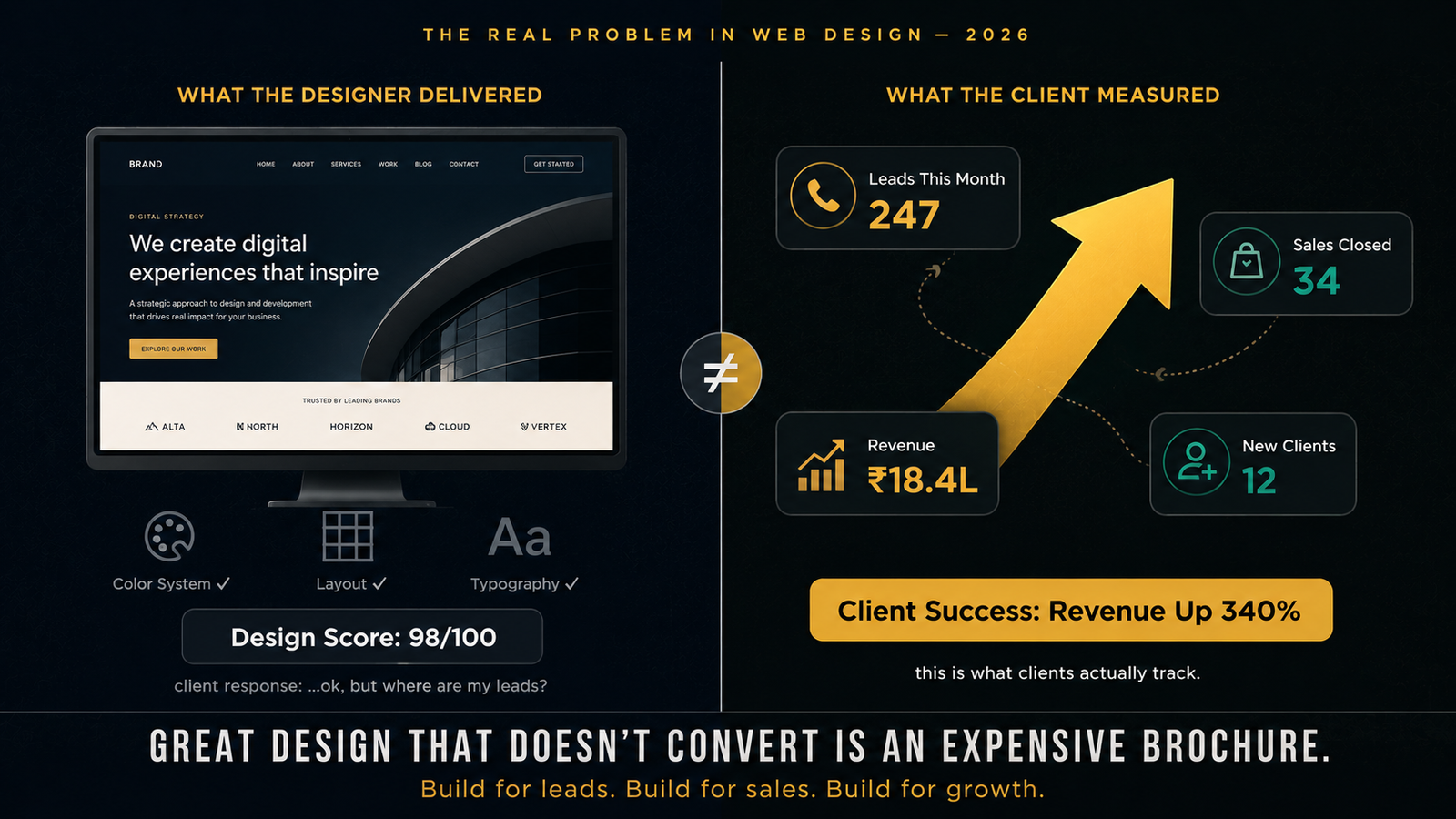
That word, measurable is doing significant work in that sentence. A client asking for a measurable result is not asking for a website. They’re asking for a business outcome. And those are two completely different briefs that require two completely different designers to fulfil.
While 71% of consumers now expect personalized web experiences, only 34% of brands are successfully delivering them. That 37-point gap represents an enormous amount of client disappointment – businesses that expected their website to create personalized, relevant experiences for their visitors and received a generic template instead.
50% of clients are showing increased interest in AI-driven website builders not because they want to fire their designer, but because they’ve seen what AI can produce quickly and cheaply, and they want to know their designer is operating at least at that level, ideally significantly above it.
The designers who understand this context are building thriving practices. The ones who don’t are losing pitches to competitors they consider less talented and wondering why.
This is the shift that defines 2026 client expectations more than anything else.
A web design company should prioritize strategy, SEO foundations, and user experience not just visual appeal to create a growth-driving website. Effective web design enhances search visibility, speeds up load times, and improves conversion rates by aligning with business goals and visitor intent.
Clients are not hiring designers to make something that looks good. They’re hiring designers to solve a business problem – more leads, more sales, more trust, more visibility. The design is the solution, not the deliverable.
Real example – Zomato: Zomato’s web presence isn’t celebrated for its visual design. It’s celebrated for how efficiently it moves a user from hunger to order confirmation. Every design decision – the prominent search bar, the filter system, the restaurant card layout – exists to reduce friction in the ordering journey. The business outcome (completed orders) shaped every design choice. That’s not aesthetics-led design. That’s outcome-led design.
Understanding what clients really want from web designers starts here – with outcomes, not aesthetics.
The designers who are landing the best clients in 2026 are the ones who walk into a first call and ask: “What does success look like for your business six months after this website launches?” Not “what colors do you like?” The question itself signals what kind of designer they are.
Gone are the days when clients were patient with long development cycles. Clients expect rapid turnaround on sites. Projects that used to take months are now expected in weeks. Faster delivery isn’t just a bonus – it’s often part of the budget and scope.
This isn’t clients being unreasonable. It’s clients who have watched AI tools generate a complete website structure in forty minutes and adjusted their mental model of what “reasonable” looks like accordingly. They’re not wrong that production timelines have compressed. They just need designers who have adapted their workflows to match.
The designers meeting this expectation are using AI-assisted tools to compress the mechanical parts of their process – sitemap generation, wireframing, first-draft copy, responsive adaptation while applying their human judgment to the decisions that actually matter. The result is genuinely faster delivery without compromised quality.
A 1-second load time drives 3x higher conversions than a 5-second load time. Speed isn’t just a technical consideration for project delivery – it’s a conversion factor built directly into the product. Clients are beginning to understand this, and they’re holding designers accountable for it.
Modern clients want clarity, accountability, and better project visibility.
The old model was: client briefs designer, designer disappears for three weeks, designer presents finished work. That model broke down years ago and has completely collapsed in 2026. Clients now expect to see progress, be consulted on decisions, and understand the reasoning behind every significant choice.
This isn’t micromanagement. It’s clients who have been burned by agencies that went dark mid-project, by deliverables that didn’t match the brief, by launches that were celebrated internally and ignored commercially. They want to be part of the process because they’ve learned that the alternative is disappointing.
Clients may revise goals, content, priorities, or design direction during a project. Designers often need to separate personal taste from evidence-based decisions and business requirements. The designers who navigate this well – who can explain why they made a specific UX decision using data and user behavior rather than personal preference – build the kind of trust that turns single projects into multi-year relationships.
Real example – Razorpay: Razorpay’s design team is famously transparent about their decision-making process – publishing case studies that walk through the specific business problem, the user research, the hypotheses tested, and the outcomes measured. Their clients don’t just receive a product. They receive a documented argument for every significant decision. That transparency is a large part of why Razorpay has grown to serve over 8 million businesses in India. The product is excellent, but so is the communication of why the product is the way it is.
Beyond UI/UX, the future is about creating websites that feel intuitive, empathetic, and human. High-end clients want digital homes that welcome their audience, not overwhelm them.
The clients paying premium rates in 2026 are paying for industry understanding, not just design execution. A restaurant owner doesn’t want a designer who is good at websites. They want a designer who understands the specific decision-making journey of someone choosing where to eat – the role of photos, the weight of reviews, the importance of a visible phone number and a working reservations system.
In 2026, creative and marketing teams need to dig deeper to understand the company they are designing for. That healthcare company isn’t going to want sterile blues and whites because that is what their competition is doing.
The discovery process – the questions asked before a pixel is placed – is where this understanding is built or missed. Designers who spend an hour asking the right questions about a client’s customers, competitors, and conversion goals produce fundamentally different work from those who send a brief form and get started immediately.
Real example – Mamaearth: Mamaearth’s web design works not because it’s visually sophisticated but because every element reflects a deep understanding of their specific customer – a health-conscious Indian consumer who is skeptical of chemicals, values transparency about ingredients, and makes decisions based on peer reviews rather than brand claims. The “toxin-free” certification placement, the ingredient transparency pages, the review-forward product pages – these are decisions that required understanding a customer psychology, not just a design brief.
Clients are moving away from one-and-done website builds. Instead, they want ongoing performance support, and many designers are shifting to retainer or subscription models to match client expectations.
But the autonomy piece is equally important. Clients want to be able to update their own content – add a blog post, change a price, update a team photo without submitting a request and waiting three days. The designer who builds a site that keeps the client permanently dependent is increasingly seen as a liability, not an asset.
This is where platform choice matters commercially. WordPress, Webflow, and Framer all give clients meaningful control over their own content post-launch. Designers who recommend platforms based on client empowerment – rather than their own comfort – build the kind of trust that generates referrals. Designers who recommend closed systems that create dependency are losing clients to more client-centric competitors.
AI tools are no longer “nice to have.” Clients now compare proposals based on tech innovation. Professionals who ignore AI will be left behind.
This doesn’t mean clients want AI-built websites. It means they want designers who are fluent enough with AI tools to deliver faster, smarter, and more efficiently and who can advise on where AI-powered features would serve their website’s goals.
In 2025, 93% of web designers incorporated AI tools into their design processes. That number has continued to climb. The 7% who haven’t are not preserving craftsmanship. They are falling behind a baseline that clients now expect as standard.
The specific AI capabilities clients are asking about in 2026: AI-powered site search, personalization based on visitor behavior, AI chatbots for instant support, and automated content updates. These are no longer enterprise-only features – they’re being requested by local service businesses, D2C brands, and professional service firms who have seen competitors implement them and want the same.
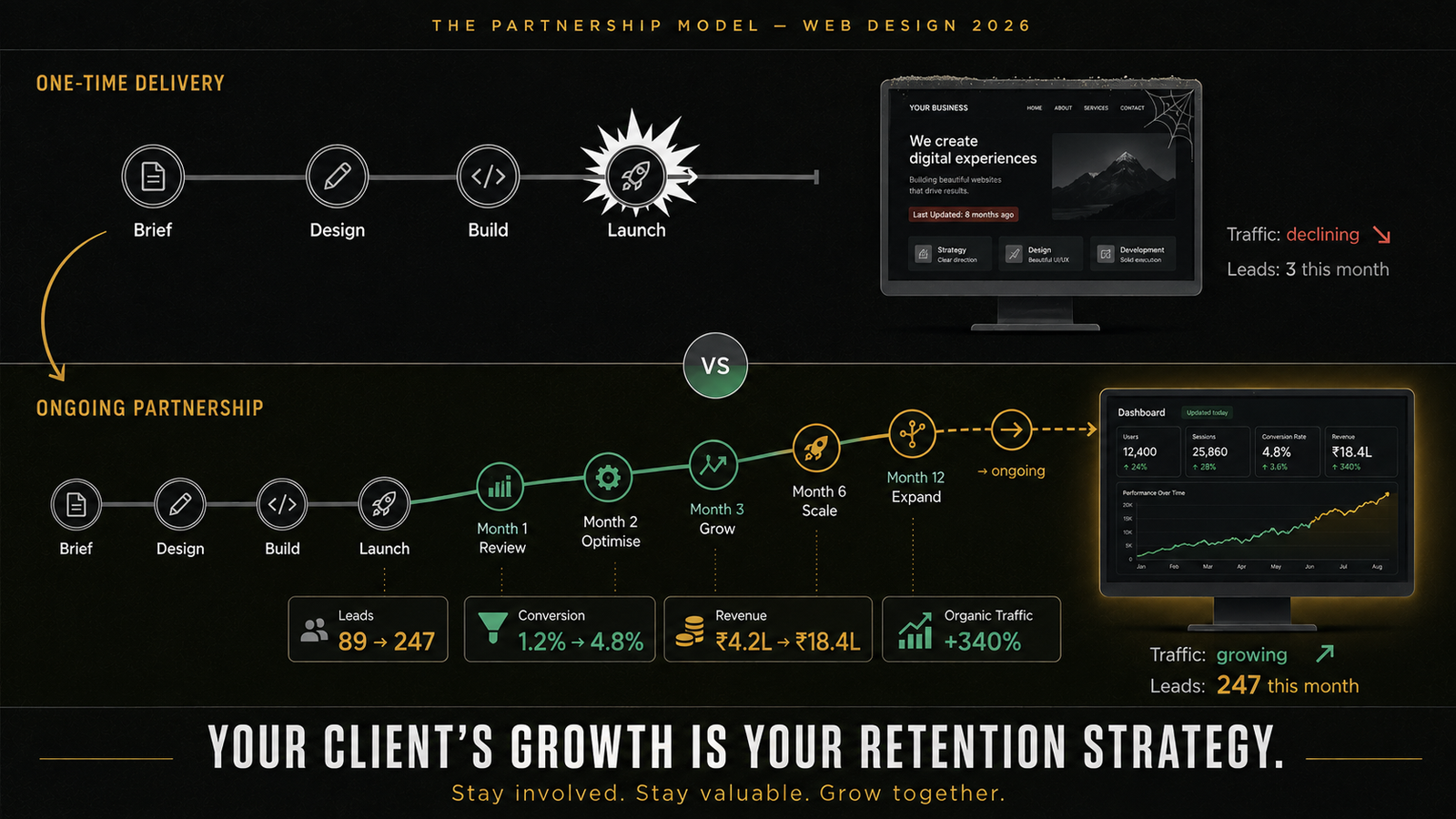
This is the expectation that most designers are still not meeting and it’s the one that generates the most client frustration.
A good web design partner should help you understand the process, reduce risk, and build a site that supports SEO, conversions, and steady growth. That support doesn’t end at launch. In fact, from the client’s commercial perspective, the launch is where the real work begins.
According to Google’s Core Web Vitals guidance, site performance is a ranking factor that requires ongoing monitoring and optimization – not a box ticked at launch. Clients are increasingly aware of this. They want a designer who treats the launch as a milestone, not a conclusion.
The most commercially successful web designers and agencies in 2026 have built post-launch review cycles into their standard offering. A 30-day performance review showing real analytics data – traffic, bounce rate, conversion rate, form submissions – transforms a completed project into an ongoing relationship. It also makes the value of the design work visible and measurable in a way that a screenshot of the finished website never could.
Real example – Nykaa: Nykaa’s digital team operates on continuous improvement cycles – regularly testing page layouts, product card designs, and checkout flows based on actual conversion data. Their website is never “done.” It’s always being refined based on what the data shows about visitor behavior. The design and the performance data are treated as a single ongoing conversation, not a one-time deliverable. That approach is what the best clients are beginning to demand from their designers too.
Here’s what connects every point above: clients don’t want a website. They want a partner who happens to build websites.
The distinction sounds small. The commercial implications are enormous. A contractor delivers a product and moves on. A partner understands the business, communicates through the process, delivers something built for outcomes, and stays involved long enough to know whether it worked.
Top web designers combine design craft with real-world execution. The best designers also know when to challenge assumptions. If a client asks for five pop-ups, neon text, and a homepage video that loads like a boulder uphill, a good designer should politely push back.
That push-back is not arrogance. It’s partnership. A contractor does what they’re told. A partner tells you when what you’re asking for won’t achieve what you actually want and offers a better alternative.
The designers building the most successful practices in 2026 are not the most talented designers. They are the most trustworthy ones. The ones clients can rely on to tell the truth, deliver on their commitments, and stay focused on outcomes rather than aesthetics.
At its core, what clients really want from web designers is someone who treats their business goals as seriously as their own.
That’s what clients really want from web designers. It has always been what they wanted. The difference is that in 2026, there are enough designers competing for every brief that clients no longer have to settle for less.